Finding Your Perfect Notebooks for Writers: A Practical Guide
I have spent more years than I care to count testing journals. It started as a simple habit, a way to keep Morning Pages from piling up on my desk, and turned into something closer to an obsession. I have filled spiral-bound school notebooks, expensive leather-bound volumes, and everything in between. Along the way I learned that the right notebook can change how you write. The wrong one can stop you cold.
When people ask me what they should look for in notebooks for writers, I always start with the same answer: it depends on what kind of writing you do. A poet working on drafts has different needs than a novelist tracking NaNoWriMo word counts. A journalist taking field notes needs something different than someone journaling with a fountain pen. The good news is that there are excellent options for every style, and most of them are more affordable than you might think.
Paper Quality: The Foundation
Paper is the first thing I check. If the paper bleeds or feathers, the notebook is useless to me. Tomoe River paper is legendary for a reason. It is thin, lightweight, and handles fountain pen ink beautifully. I use a Lamy Safari with a fine nib, and on Tomoe River paper the ink stays crisp with no show-through on the other side. The Hobonichi Techo uses Tomoe River paper, which is why it has such a devoted following among writers who work with wet inks.
For those who prefer a thicker, more substantial feel, Clairefontaine and Rhodia offer coated papers that are smooth and resistant to bleeding. Rhodia notebooks have a slight tooth that gives a pleasant feedback when writing. Their staple-bound and wirebound pads are a staple on my desk. Clairefontaine makes a similar product, sometimes a shade smoother. Both are made in France and use the same basic paper stock. I have used them for years with Pilot G2 gel pens and never had a problem.
Another strong option is Maruman Mnemosyne. Their paper is incredibly smooth and takes a wide range of pens well. The binding lies flat, which matters a lot when you are writing on a crowded train or at a cramped cafe table. I keep one in my bag for drafting scenes on the go.
Binding and Format: What Stays Open and What Travels
Not all bindings are created equal. A notebook that refuses to stay open is a distraction during a flow state. Leuchtturm1917 notebooks have a thread-bound spine that opens flat with a little coaxing. They also number the pages and include a table of contents at the front, which is helpful if you are the type who revisits old notes. I have used them for Morning Pages for months at a time and the binding held up well.
Moleskine is the name most people recognize. Their classic hardcover notebooks have a good feel and a decent paper for ballpoint and gel pens. But their paper has gotten thinner over the years, and fountain pen users often complain about bleed-through. If you write with a fountain pen or a heavy rollerball, Moleskine may not be your best choice. I still use them for quick notes because the size is convenient, but I no longer trust them for long-term drafts.
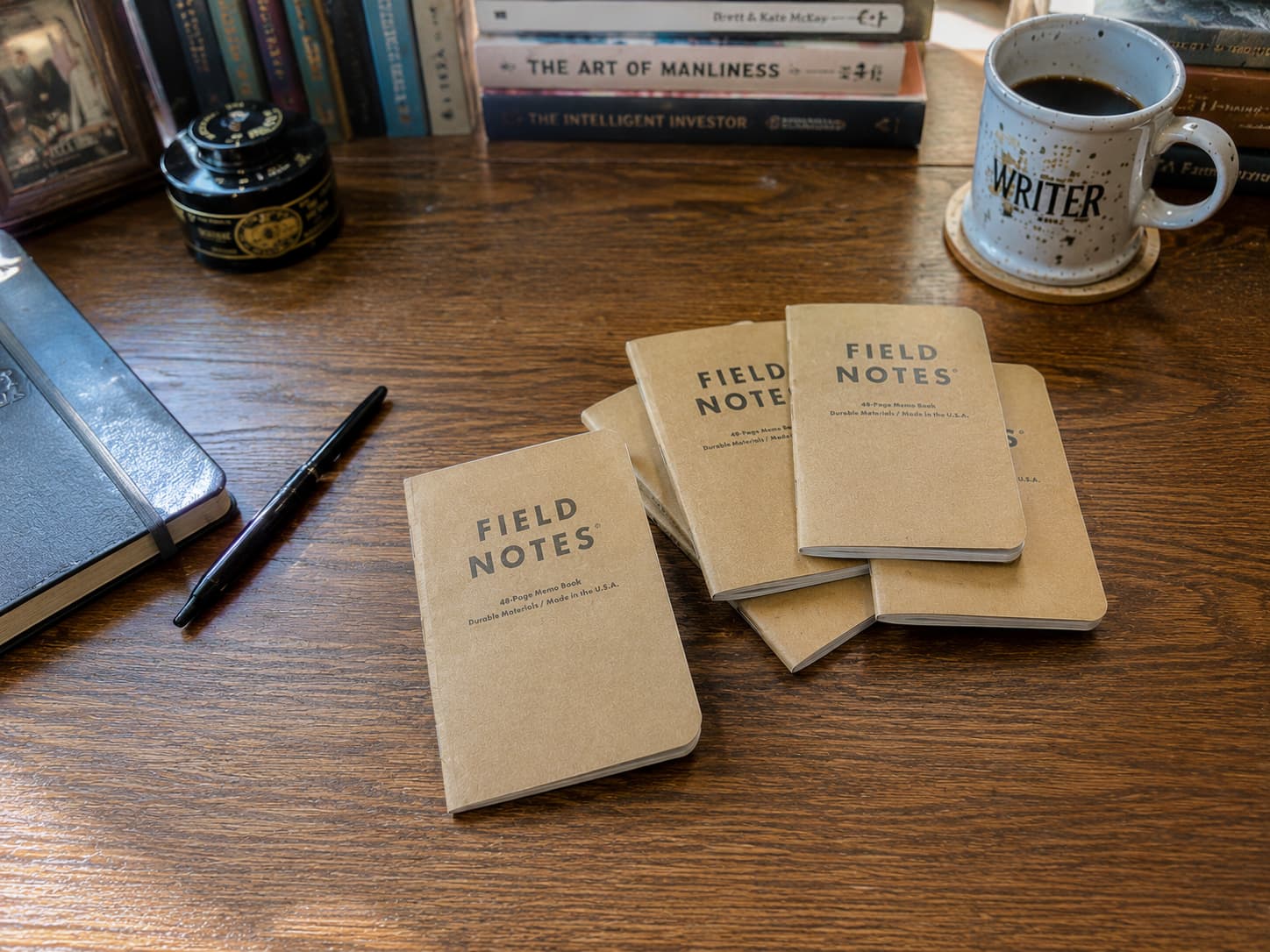
Field Notes are smaller and more utilitarian. They fit in a back pocket. The paper is okay for a ballpoint or pencil, but not great for wet ink. I carry one for random observations, snippets of dialogue I overhear, or sudden ideas during a walk. They are not meant to be archival, and that is fine. Sometimes you just need a place to catch a thought before it disappears.
Baron Fig makes a well-bound notebook with a soft cover and a sewn binding. Their paper is good for most pens, though I have noticed some ghosting with heavy ink. The design is clean and minimal. They are a solid middle ground between the ruggedness of Field Notes and the formality of a Leuchtturm.
Specialty Notebooks for Specific Practices
If you practice Morning Pages as described in Julia Cameron’s The Artists Way, you need a notebook that can handle a lot of ink. Three pages of freewriting every morning adds up. I have gone through several Midori MD notebooks for this purpose. Midori MD uses a smooth, cream-colored paper that takes fountain pens beautifully. The binding is simple and the cover is soft. It feels like a real writer’s tool, not a piece of stationery.
For those who like to plan and write in the same book, the Hobonichi Techo is hard to beat. It comes in A6 and A5 sizes and offers a daily page with a date. The Tomoe River paper is thin enough to keep the book slim but strong enough to hold up to heavy use. I have used one for a full year and the binding is still tight. The downside is the price, but if you write every day, it is worth it.
Kokuyo makes notebooks with a unique micro-perforated paper that tears out cleanly. Their loose-leaf binders are popular in Japan. I use a Kokuyo Campus notebook for scratch drafting because the paper is affordable and handles fountain pens better than you would expect at that price point.
Exacompta is another French brand that uses Clairefontaine paper. Their cloth-bound journals are durable and lie flat. I keep one as a reading journal because the paper does not feather with the various pens I use for marginal notes.
Notebooks for Writers Who Use Tech
Not every writer wants paper. Rocketbook offers a reusable notebook that works with special pens. You write, scan the pages with their app, and then wipe the book clean with a damp cloth. I was skeptical at first, but I have found it useful for drafting lists and brainstorming sessions where I do not want to waste paper. The pages have a slight texture that feels closer to paper than a whiteboard. It is not a replacement for a dedicated journal, but it is a good tool for rough work.
Doane Paper makes a combination notebook with a dot-grid on one side and a lined section on the other. It is designed for both writing and sketching. I have used it for storyboarding scenes and mapping out character arcs. The paper is smooth and works well with most pens.
Overcoming Writer’s Bloc with the Right Tools
A good notebook will not cure writer’s bloc on its own, but a bad one can make it worse. When you sit down to write and the paper bleeds, the binding fights you, or the lines are too narrow, the friction adds up. I have thrown away pages because the ink looked terrible on the paper, and that little frustration was enough to break my concentration. The right notebook disappears. You stop thinking about the page and start thinking about the words.
That is what makes a great notebook for a writer. It is not about brand names or status. It is about a tool that gets out of your way. I have written in cheap composition books that worked fine because the paper was adequate and the binding did not fall apart. I have also bought expensive notebooks that sat unused because the paper was too rough or the format did not match my process.
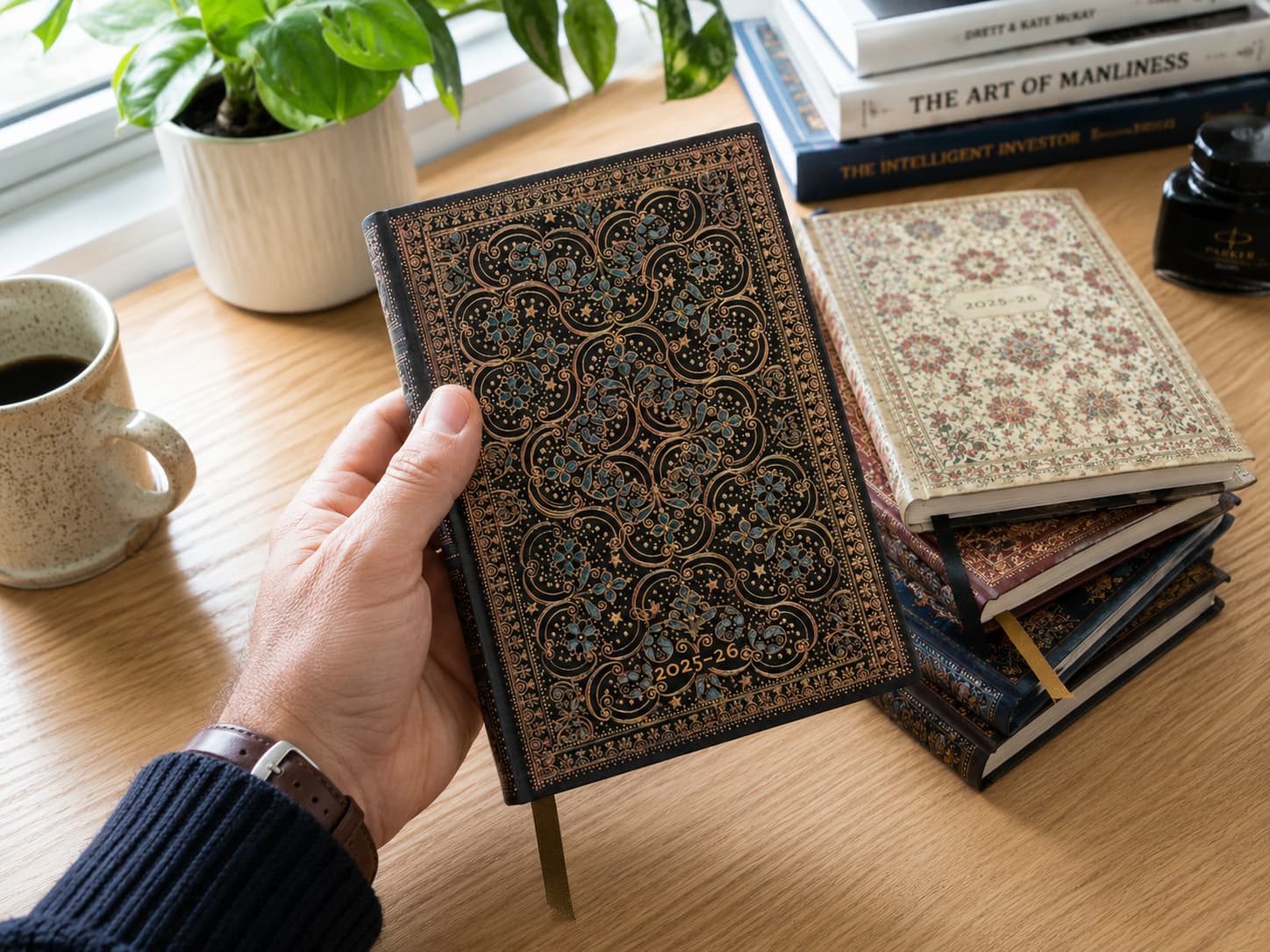
If you are just starting out, I recommend trying a few different options. Pick up a Leuchtturm1917, a Rhodia webbie, and a Field Notes pack. Write in each for a week. See which one you reach for when the words are flowing. That is the one you buy in bulk.
Final Thoughts on the Search
The search for the perfect notebooks for writers is personal. What works for me may not work for you. But the core principles hold: good paper, solid binding, and a format that matches your habits. I have tested dozens of brands over the years, and I keep coming back to a few that I trust. Tomoe River paper for fountain pens. Clairefontaine for gel pens. Leuchtturm for structure. Hobonichi for daily practice. Field Notes for pocket carry.
Do not overthink it. Pick one, fill it, and then pick another. The act of writing is what matters. The notebook is just the container. But a good container makes the act easier, and that alone is worth the search.